Written and Fact-checked by Whereig Editors | Last Updated On: June 15, 2026
Where is Algiers Located on the Algiers Map? Find Algiers’s location map, coordinates, population, nearby cities, attractions, roads and highways, climate, transportation, and important city facts.
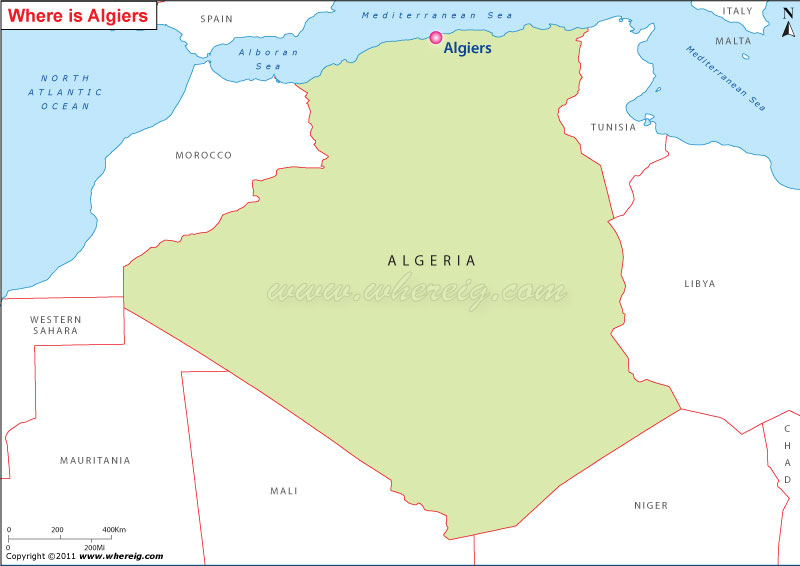
Location Map of Algiers, Algiers
About Map: The map shows the location of Algiers in the Algiers.
Where is Melbourne Located?
The name of the city is derived from French Alger and Catalan Alguere, and from the Arabic word al-jazair, the meaning of the word is 'the islands'. Primarily, it refers to the four islands that lay off the city's coast; however, later on it become part of the mainland in 1525.
Furthermore, the modern region of the city has been developed on the level ground nearby seashore; whereas the older one climbs the steep hill behind the modern town and is crowned by the casbah or citadel. By virtue of being situated at the coast of Mediterranean Sea, the city has Mediterranean Climate.
Moreover, the capital city Algiers is a significant economic, commercial, and financial center of the country Algeria. The country's stock exchange is located in the city. Surprisingly, the city has the highest cost of living in comparison of any city in North Africa.
Algiers, Algiers Province Quick Facts
Fact
Details
City
Algiers
Province
Algiers Province
Country
Algeria
National Capital
Algiers
Region
North Africa
Latitude
36.7538° N
Longitude
3.0588° E
Elevation
33 ft (10 m)
Land Area
140.0 sq mi
Water Area
0.0 sq mi
Total Area
140.0 sq mi
Population (Latest Estimate)
Approximately 3.6 million
Population Density
Approximately 25,700 per sq mi
Postal Codes
16000 and surrounding district codes
Telephone Code
+213 21
Time Zone Standard
Central European Time (UTC+1)
Time Zone Daylight
No daylight saving time observed
Currency
Algerian Dinar (DZD)
Administrative Code
Algiers Province Administrative Division
National Assembly Representation
Multiple constituencies
Nearby Cities to Algiers, Algeria
Bab Ezzouar, Algeria - 9 mi East
Dar El Beida, Algeria - 10 mi East
Birkhadem, Algeria - 6 mi South
El Harrach, Algeria - 7 mi East
Chéraga, Algeria - 9 mi West
Zeralda, Algeria - 17 mi West
Blida, Algeria - 29 mi Southwest
Boumerdès, Algeria - 24 mi East
Tipaza, Algeria - 39 mi West
Kolea, Algeria - 22 mi Southwest
Algiers, Algeria Climate and Weather Overview
Month
Avg High (°F)
Avg Low (°F)
Avg Rainfall (in)
January
61
45
4.0
April
70
52
2.4
July
88
68
0.2
October
79
61
2.8
Annual
74
57
27.5
Climate Attribute
Details
Climate Classification (Köppen)
Csa - Hot-Summer Mediterranean
Annual Rainfall
Approximately 27.5 inches
Annual Sunshine Days
More than 280 sunny days
Hurricane/Tornado Risk
Very Low
Snowfall
Rare and generally negligible
Driving Distances from Algiers, Algeria
City
Country
Distance (mi)
Approx. Drive Time
Blida
Algeria
29
45 min
Boumerdès
Algeria
24
35 min
Tipaza
Algeria
39
1 hr
Tizi Ouzou
Algeria
65
1 hr 30 min
Médéa
Algeria
56
1 hr 20 min
Aïn Defla
Algeria
89
2 hr
Béjaïa
Algeria
136
3 hr
Chlef
Algeria
124
2 hr 40 min
Djelfa
Algeria
173
3 hr 30 min
Oran
Algeria
268
4 hr 30 min
Transportation and Connectivity in Algiers, Algeria
Airport Name
Houari Boumediene Airport
IATA Code
ALG
Port
Port of Algiers
Major Highways
East-West Highway, N1, N5, N11
Train Service
SNTF Regional and National Rail Service
Local Transit Service
Algiers Metro, Tramway, ETUSA Buses
East-West Highway - Algeria's primary motorway connecting major coastal cities.
N1 Highway - Links Algiers with central and southern Algeria.
N5 Highway - Connects Algiers to eastern provinces.
N11 Highway - Follows the Mediterranean coast westward.
Algiers Ring Roads - Help distribute traffic across metropolitan districts.
Key Landmarks and Places to Visit in Algiers, Algeria
Landmark Name
Type
Casbah of Algiers
Historic Site
Martyrs' Memorial
Monument
Notre Dame d'Afrique
Religious Site
Ketchaoua Mosque
Historic Mosque
Bardo National Museum
Museum
Jardin d'Essai du Hamma
Botanical Garden
Algiers Great Mosque
Religious Landmark
Palais des Rais
Historic Site
Sablettes Waterfront
Recreation Area
Maqam Echahid
Monument
Places to Visit in Algiers, Algeria
Landmark Name
Type
Casbah of Algiers
Historic District
Martyrs' Memorial
Monument
Notre Dame d'Afrique
Religious Site
Jardin d'Essai du Hamma
Botanical Garden
Bardo National Museum
Museum
Ketchaoua Mosque
Mosque
Palais des Rais
Historic Site
Sablettes Waterfront
Waterfront
Algiers Great Mosque
Mosque
Maqam Echahid
Monument
Colleges and Universities in Algiers, Algeria
Institution Name
Type
Level
Notable For
University of Algiers
Public
University
Historic national university
University of Algiers 2
Public
University
Humanities studies
University of Algiers 3
Public
University
Economics and business
USTHB
Public
University
Science and technology
National Polytechnic School
Public
University
Engineering education
Waterbodies in Algiers, Algeria
Mediterranean Sea, Bay of Algiers, Oued El Harrach, Oued Mazafran, Oued Reghaia, Reghaia Lake, Lake Mazafran, Oued Beni Messous
Golf Courses in Algiers, Algeria
Dely Ibrahim Golf Club, Golf de Dély Ibrahim, Golf Club of Algiers, Palm Golf Club Staoueli, Zeralda Golf Practice Facilities
Algiers, Algeria - Key Historical Facts
Algiers was founded in antiquity and developed into an important Mediterranean trading center.
The city became a major base of the Ottoman Empire in North Africa during the sixteenth century.
For centuries, Algiers was known as a prominent maritime and commercial hub in the western Mediterranean.
France captured the city in 1830, beginning more than a century of colonial rule in Algeria.
Algiers played a central role in the Algerian War of Independence between 1954 and 1962.
After independence in 1962, Algiers became the political, economic, and cultural capital of modern Algeria.
Algiers, Algiers Province Quick Facts
Fact
Details
City
Algiers
Province
Algiers Province
Country
Algeria
National Capital
Algiers
Region
North Africa
Latitude
36.7538° N
Longitude
3.0588° E
Elevation
33 ft (10 m)
Land Area
140.0 sq mi
Water Area
0.0 sq mi
Total Area
140.0 sq mi
Population (Latest Estimate)
Approximately 3.6 million
Population Density
Approximately 25,700 per sq mi
Postal Codes
16000 and surrounding district codes
Telephone Code
+213 21
Time Zone Standard
Central European Time (UTC+1)
Time Zone Daylight
No daylight saving time observed
Currency
Algerian Dinar (DZD)
Administrative Code
Algiers Province Administrative Division
National Assembly Representation
Multiple constituencies
Nearby Cities to Algiers, Algeria
Bab Ezzouar, Algeria - 9 mi East
Dar El Beida, Algeria - 10 mi East
Birkhadem, Algeria - 6 mi South
El Harrach, Algeria - 7 mi East
Chéraga, Algeria - 9 mi West
Zeralda, Algeria - 17 mi West
Blida, Algeria - 29 mi Southwest
Boumerdès, Algeria - 24 mi East
Tipaza, Algeria - 39 mi West
Kolea, Algeria - 22 mi Southwest
Algiers, Algeria Climate and Weather Overview
Month
Avg High (°F)
Avg Low (°F)
Avg Rainfall (in)
January
61
45
4.0
April
70
52
2.4
July
88
68
0.2
October
79
61
2.8
Annual
74
57
27.5
Climate Attribute
Details
Climate Classification (Köppen)
Csa - Hot-Summer Mediterranean
Annual Rainfall
Approximately 27.5 inches
Annual Sunshine Days
More than 280 sunny days
Hurricane/Tornado Risk
Very Low
Snowfall
Rare and generally negligible
Driving Distances from Algiers, Algeria
City
Country
Distance (mi)
Approx. Drive Time
Blida
Algeria
29
45 min
Boumerdès
Algeria
24
35 min
Tipaza
Algeria
39
1 hr
Tizi Ouzou
Algeria
65
1 hr 30 min
Médéa
Algeria
56
1 hr 20 min
Aïn Defla
Algeria
89
2 hr
Béjaïa
Algeria
136
3 hr
Chlef
Algeria
124
2 hr 40 min
Djelfa
Algeria
173
3 hr 30 min
Oran
Algeria
268
4 hr 30 min
Transportation and Connectivity in Algiers, Algeria
Airport Name
Houari Boumediene Airport
IATA Code
ALG
Port
Port of Algiers
Major Highways
East-West Highway, N1, N5, N11
Train Service
SNTF Regional and National Rail Service
Local Transit Service
Algiers Metro, Tramway, ETUSA Buses
East-West Highway - Algeria's primary motorway connecting major coastal cities.
N1 Highway - Links Algiers with central and southern Algeria.
N5 Highway - Connects Algiers to eastern provinces.
N11 Highway - Follows the Mediterranean coast westward.
Algiers Ring Roads - Help distribute traffic across metropolitan districts.
Key Landmarks and Places to Visit in Algiers, Algeria
Landmark Name
Type
Casbah of Algiers
Historic Site
Martyrs' Memorial
Monument
Notre Dame d'Afrique
Religious Site
Ketchaoua Mosque
Historic Mosque
Bardo National Museum
Museum
Jardin d'Essai du Hamma
Botanical Garden
Algiers Great Mosque
Religious Landmark
Palais des Rais
Historic Site
Sablettes Waterfront
Recreation Area
Maqam Echahid
Monument
Places to Visit in Algiers, Algeria
Landmark Name
Type
Casbah of Algiers
Historic District
Martyrs' Memorial
Monument
Notre Dame d'Afrique
Religious Site
Jardin d'Essai du Hamma
Botanical Garden
Bardo National Museum
Museum
Ketchaoua Mosque
Mosque
Palais des Rais
Historic Site
Sablettes Waterfront
Waterfront
Algiers Great Mosque
Mosque
Maqam Echahid
Monument
Colleges and Universities in Algiers, Algeria
Institution Name
Type
Level
Notable For
University of Algiers
Public
University
Historic national university
University of Algiers 2
Public
University
Humanities studies
University of Algiers 3
Public
University
Economics and business
USTHB
Public
University
Science and technology
National Polytechnic School
Public
University
Engineering education
Waterbodies in Algiers, Algeria
Mediterranean Sea, Bay of Algiers, Oued El Harrach, Oued Mazafran, Oued Reghaia, Reghaia Lake, Lake Mazafran, Oued Beni Messous
Golf Courses in Algiers, Algeria
Dely Ibrahim Golf Club, Golf de Dély Ibrahim, Golf Club of Algiers, Palm Golf Club Staoueli, Zeralda Golf Practice Facilities
Algiers, Algeria - Key Historical Facts
Algiers was founded in antiquity and developed into an important Mediterranean trading center.
The city became a major base of the Ottoman Empire in North Africa during the sixteenth century.
For centuries, Algiers was known as a prominent maritime and commercial hub in the western Mediterranean.
France captured the city in 1830, beginning more than a century of colonial rule in Algeria.
Algiers played a central role in the Algerian War of Independence between 1954 and 1962.
After independence in 1962, Algiers became the political, economic, and cultural capital of modern Algeria.