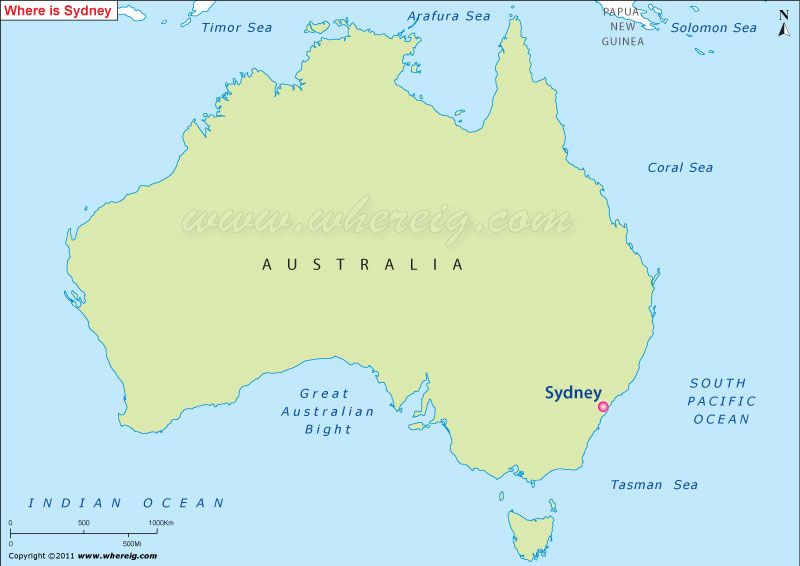
Sydney is the capital city of New South Wales state of Australia and the residents of Sydney are known as Sydneysiders.
Primarily, the city was established by Arthur Phillip in the year 1788 at the Sydney Cove. In fact, city is built on hills nearby Port Jackson that is popularly known as Sydney Harbor. By virtue of this location, the Sydney Opera House and Harbor Bridge are built there; these two are the landmarks of the city. Furthermore, the hinterland of the metropolitan area is surrounded by national parks.
The city has some of the beautiful beaches that fascinate tourists from all over the world. Besides, the city parks and Botanical gardens enrich the city environment. In addition, Sydney has a status of an international centre for commerce, arts, fashion, culture, entertainment, music, education and tourism collectively making it one of GaWC's Alpha + world cities. Sydney is also ranked among the top 10 most livable cities in the world by Mercer Human Resource Consulting and The Economist.
Sydney, New South Wales Quick Facts
Fact
Details
City
Sydney
State
New South Wales
Country
Australia
State Capital
Sydney
Region
Southeastern Australia
Latitude
33.8688° S
Longitude
151.2093° E
Elevation
190 ft (58 m)
Land Area
4,775 sq mi
Water Area
Sydney Harbour, rivers and coastal waters
Total Area
4,775 sq mi
Population (2021 Census)
Approximately 5,231,000
Population Density
Approximately 1,095 per sq mi
Postcodes
2000, 2007, 2008 and surrounding metropolitan postcodes
Area Code
02
Time Zone Standard
Australian Eastern Standard Time (UTC+10)
Time Zone Daylight
Australian Eastern Daylight Time (UTC+11)
Currency
Australian Dollar (AUD)
Australian Statistical Area Code
Greater Sydney GCCSA
Federal Representation
Multiple Federal Electoral Divisions
Nearby Cities to Sydney, New South Wales
Parramatta, New South Wales - 15 mi West
Liverpool, New South Wales - 20 mi Southwest
Penrith, New South Wales - 34 mi West
Campbelltown, New South Wales - 33 mi Southwest
Wollongong, New South Wales - 53 mi South
Newcastle, New South Wales - 101 mi North
Gosford, New South Wales - 49 mi North
Katoomba, New South Wales - 63 mi West
Richmond, New South Wales - 40 mi Northwest
Bathurst, New South Wales - 124 mi West
Sydney, New South Wales Climate and Weather Overview
Month
Avg High (°F)
Avg Low (°F)
Avg Rainfall (in)
January
80
67
4.0
April
74
58
4.9
July
63
47
3.7
October
73
57
3.1
Annual
72
57
47.0
Climate Attribute
Details
Climate Classification (Köppen)
Cfa - Humid Subtropical
Annual Rainfall
Approximately 47 inches
Annual Sunshine Days
About 105 clear days annually
Hurricane/Tornado Risk
Very Low
Snowfall
No measurable snowfall in the city
Driving Distances from Sydney, New South Wales
City
State
Distance (mi)
Approx. Drive Time
Parramatta
New South Wales
15
30 min
Liverpool
New South Wales
20
35 min
Penrith
New South Wales
34
50 min
Campbelltown
New South Wales
33
50 min
Wollongong
New South Wales
53
1 hr 20 min
Gosford
New South Wales
49
1 hr 10 min
Newcastle
New South Wales
101
2 hr
Katoomba
New South Wales
63
1 hr 30 min
Richmond
New South Wales
40
1 hr
Bathurst
New South Wales
124
2 hr 30 min
Transportation and Connectivity in Sydney, New South Wales
Airport Name
Sydney Kingsford Smith Airport
IATA Code
SYD
Port
Port Jackson (Sydney Harbour)
Major Highways
M1, M4, M5, M7, A1
Train Service
Sydney Trains, NSW TrainLink
Local Transit Service
Metro, Trains, Light Rail, Ferries and Buses
M1 Pacific Motorway - Connects Sydney with Newcastle and Brisbane.
M4 Motorway - Major route linking Sydney with western suburbs and regional NSW.
M5 Motorway - Connects Sydney Airport with southwestern districts.
M7 Motorway - Orbital motorway serving western Sydney.
A1 Princes Highway - Coastal route linking Sydney with Melbourne and the South Coast.
Key Landmarks and Places to Visit in Sydney, New South Wales
Landmark Name
Type
Sydney Opera House
Performing Arts Venue
Sydney Harbour Bridge
Landmark
Bondi Beach
Beach
Taronga Zoo Sydney
Zoo
Royal Botanic Garden Sydney
Botanical Garden
The Rocks
Historic District
Darling Harbour
Entertainment Precinct
Queen Victoria Building
Historic Site
Sea Life Sydney Aquarium
Aquarium
Blue Mountains National Park
Natural Attraction
Places to Visit in Sydney, New South Wales
Landmark Name
Type
Sydney Opera House
Performing Arts Venue
Sydney Harbour Bridge
Landmark
Bondi Beach
Beach
Taronga Zoo Sydney
Zoo
Royal Botanic Garden Sydney
Botanical Garden
The Rocks
Historic District
Darling Harbour
Entertainment Precinct
Queen Victoria Building
Historic Site
Sea Life Sydney Aquarium
Aquarium
Blue Mountains National Park
Natural Attraction
Colleges and Universities in Sydney, New South Wales
Institution Name
Type
Level
Notable For
University of Sydney
Public
University
Research excellence
UNSW Sydney
Public
University
Engineering and innovation
Macquarie University
Public
University
Business and science
University of Technology Sydney
Public
University
Technology and design
Western Sydney University
Public
University
Community engagement
Waterbodies in Sydney, New South Wales
Sydney Harbour, Parramatta River, Georges River, Hawkesbury River, Pacific Ocean, Botany Bay, Middle Harbour, Port Hacking, Cooks River, Lane Cove River
Golf Courses in Sydney, New South Wales
Royal Sydney Golf Club, The Australian Golf Club, New South Wales Golf Club, Bonnie Doon Golf Club, St Michael's Golf Club, The Lakes Golf Club, Avondale Golf Club, Concord Golf Club, Riverside Oaks Golf Resort, Long Reef Golf Club
Sydney, New South Wales - Key Historical Facts
Sydney was established in 1788 as the first permanent European settlement in Australia.
The city began as a British penal colony at Sydney Cove in Port Jackson.
Sydney grew rapidly during the nineteenth century through trade, shipping, and immigration.
The Sydney Harbour Bridge opened in 1932 and became one of Australia's most recognizable landmarks.
The Sydney Opera House opened in 1973 and is now a UNESCO World Heritage Site.
Today, Sydney is Australia's largest city and a major global center for finance, tourism, and culture.