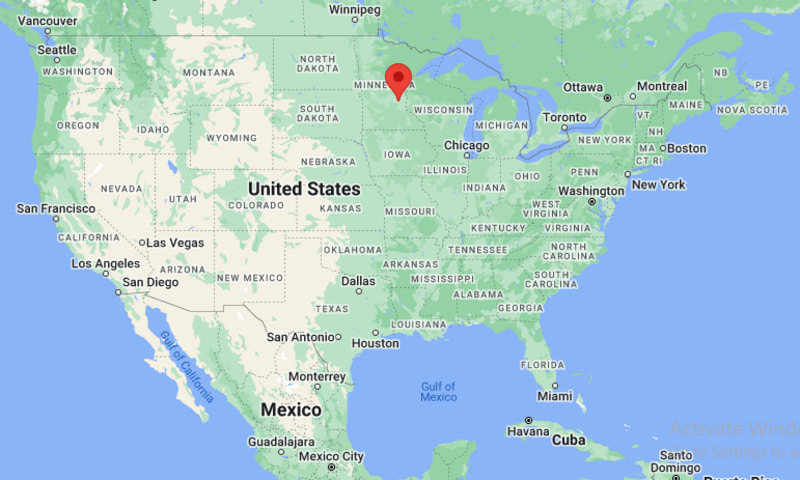
Where is Champlin Located? - Champlin is a city located in the Hennepin County of Minnesota, United States. Champlin lies between 41.4483432 Degrees North latitudes and 97.0597019 Degrees West longitudes.
Location Map of Champlin, Minnesota
Champlin Map, Minnesota, USA
Where is Champlin?: The Google Map showing the location of Champlin in the U.S. state of Minnesota.
Where is Champlin Located?
Champlin is a city located in the Hennepin County of Minnesota, United States. Champlin lies between 41.4483432 Degrees North latitudes and 97.0597019 Degrees West longitudes. According to 2020 U.S.census, the population of Champlin city is 23919 people and the city has a total area of 8.15 sq mi. The city has numerous parks and recreational facilities.
No hurricane risk and low to moderate tornado risk
Snowfall
About 54 in annually
Driving Distances from Champlin, Minnesota
City
State
Distance (mi)
Approx. Drive Time
Anoka
Minnesota
2
5 min
Dayton
Minnesota
3
10 min
Coon Rapids
Minnesota
4
10 min
Brooklyn Park
Minnesota
7
15 min
Andover
Minnesota
8
15 min
Maple Grove
Minnesota
8
15 min
Ramsey
Minnesota
9
15 min
Osseo
Minnesota
10
20 min
Rogers
Minnesota
12
20 min
Minneapolis
Minnesota
19
30 min
Transportation and Connectivity in Champlin, Minnesota
Transportation
Details
Airport Name
Minneapolis-Saint Paul International Airport
IATA Code
MSP
Port
No commercial port
Major Highways
U.S. Highway 169, County Road 81, Dayton River Road
Train/Amtrak Service
Nearest Amtrak station in Saint Paul
Local Bus/Transit Service
Metro Transit and Maple Grove Transit (nearby routes)
U.S. Highway 169 provides direct access to Minneapolis, Elk River, and other communities in the Twin Cities metropolitan area.
Minneapolis-Saint Paul International Airport is approximately 30 miles southeast and offers extensive domestic and international flights.
Metro Transit and nearby suburban transit providers offer bus connections to employment centers throughout the Twin Cities.
Amtrak passenger rail service is available from Union Depot in Saint Paul.
Champlin is known for its location along the Mississippi River, excellent parks, recreational trails, and family-friendly neighborhoods within the Minneapolis-Saint Paul metropolitan area.
Key Landmarks and Places to Visit in Champlin, Minnesota
Landmark Name
Type
Elm Creek Park Reserve
Regional Park
Mississippi Point Park
Riverfront Park
Andrews Park
Community Park
Champlin Mill Pond
Historic Site
Anoka Nature Preserve
Nature Preserve
Bunker Hills Regional Park
Regional Park
Coon Rapids Dam Regional Park
Regional Park
Rush Creek Regional Trail
Multi-Use Trail
Historic Oliver H. Kelley Farm
Historic Farm
The Shoppes at Arbor Lakes
Shopping District
Colleges and Universities in and near Champlin, Minnesota
Institution Name
Type
Level
Notable For
Anoka-Ramsey Community College
Public
Community College
Transfer degrees, nursing, and workforce education
North Hennepin Community College
Public
Community College
Liberal arts, business, and technical programs
University of Northwestern - St. Paul
Private
University
Business, education, ministry, and liberal arts
University of Minnesota Twin Cities
Public
University
Engineering, medicine, business, and research
Hennepin Technical College
Public
Technical College
Skilled trades, information technology, and healthcare programs
Waterbodies in Champlin, Minnesota
Mississippi River, Elm Creek, Rum River, Hayden Lake, Rice Lake, Shingle Creek, Mill Pond, Crooked Lake
Golf Courses in and near Champlin, Minnesota
Edinburgh USA Golf Course, Rush Creek Golf Club, Bunker Hills Golf Club, Green Haven Golf Course, Pheasant Acres Golf Course, Sundance Golf Club, RiverPines Golf Course, Eagle Lake Youth Golf Center
Champlin, Minnesota - Key Historical Facts
Champlin was established in the mid-1800s along the Mississippi River, where water transportation and logging supported early settlement.
The community was named after U.S. Navy officer Stephen Champlin, who served during the War of 1812.
Early industries included flour milling, lumber processing, and farming, taking advantage of the nearby river and fertile land.
Following the growth of the Twin Cities metropolitan area after World War II, Champlin transitioned from a small rural community into a thriving suburban city.
The city's park system, riverfront improvements, and trail network have enhanced recreational opportunities while preserving natural resources.
Today, Champlin is recognized for its scenic Mississippi River location, quality schools, outdoor recreation, and convenient access to Minneapolis and Saint Paul.