Written and Fact-checked by Whereig Editors | Last Updated On: June 18, 2026
Stockholm is the capital city of Sweden, located in Stockholm County on the country's eastern coast. Situated at approximately 59.3293° N latitude and 18.0686° E longitude, the city covers about 188 sq km (73 sq mi) and has an estimated population of around 990,000 people.
Location Map of Stockholm, Sweden
About Map: The map showing location of Stockholm in Sweden.
Where is Stockholm Located?
Stockholm, a seaport, the largest city and the national capital of Sweden. Stockholm is located in the south-eastern part of Sweden. Likewise, it homes the national Swedish government, the Riksdag (parliament), and the official residence of the Swedish monarch and also the prime minister. However, after 1980, the monarchs residents shifted to Drottningholm Palace outside of Stockholm and the Royal Palace of Stockholm is used as his workplace and official residence.
Geographically, it is located at the mouth of Lake Malaren and has strategic location on 14 islands in Baltic Sea. Furthermore, Stockholm is the political, economic, cultural, and media, centers. Besides, it has also historical importance. Stockholm has been nominated by GaWC as a global city, with a ranking of Alpha-. Because of its clean environment, well developed infrastructure, some of the historic architecture, and plenty of parks Stockholm is considered as Venice of North.
Moreover, it is major economic center because of having some of the world class companies.
Stockholm urban area municipalities
Municipality
Population (2016)
Municipality
Population (2016)
Municipality
Population (2016)
Stockholm
935,619
Huddinge
107,538
Solna
78,129
Botkyrka
90,675
Järfälla
74,412
Sundbyberg
47,750
Danderyd
32,653
Nacka
99,359
Tyresö
47,103
Haninge
85,693
Sollentuna
71,023
Stockholm, Stockholm County Quick Facts
Fact
Details
City
Stockholm
County
Stockholm County
Country
Sweden
National Capital
Stockholm
Region
East-Central Sweden
Latitude
59.3293° N
Longitude
18.0686° E
Elevation
92 ft (28 m)
Land Area
73 sq mi
Water Area
Includes Lake Mälaren, Baltic Sea and waterways
Total Area
73 sq mi
Population (Latest Estimate)
Approximately 990,000
Population Density
Approximately 13,500 per sq mi
Postal Codes
100 05-199 99
Area Code
+46 8
Time Zone Standard
Central European Time (UTC+1)
Time Zone Daylight
Central European Summer Time (UTC+2)
Currency
Swedish Krona (SEK)
Administrative Code
Stockholm Municipality
National Representation
Riksdag Constituencies
Nearby Cities to Stockholm, Sweden
Solna, Sweden - 4 mi Northwest
Sundbyberg, Sweden - 5 mi Northwest
Nacka, Sweden - 4 mi East
Lidingö, Sweden - 5 mi Northeast
Huddinge, Sweden - 9 mi South
Täby, Sweden - 10 mi North
Sollentuna, Sweden - 9 mi North
Haninge, Sweden - 16 mi South
Södertälje, Sweden - 23 mi Southwest
Uppsala, Sweden - 44 mi North
Stockholm, Sweden Climate and Weather Overview
Month
Avg High (°F)
Avg Low (°F)
Avg Rainfall (in)
January
33
25
1.5
April
52
35
1.2
July
73
56
2.8
October
51
42
2.0
Annual
52
40
21.0
Climate Attribute
Details
Climate Classification (Köppen)
Dfb - Humid Continental
Annual Rainfall
Approximately 21 inches
Annual Sunshine Days
Approximately 1,850 sunshine hours
Hurricane/Tornado Risk
Very Low
Snowfall
Moderate Winter Snowfall
Driving Distances from Stockholm, Sweden
City
County
Distance (mi)
Approx. Drive Time
Solna
Stockholm
4
15 min
Nacka
Stockholm
4
15 min
Sundbyberg
Stockholm
5
15 min
Lidingö
Stockholm
5
15 min
Huddinge
Stockholm
9
20 min
Sollentuna
Stockholm
9
20 min
Täby
Stockholm
10
20 min
Haninge
Stockholm
16
25 min
Södertälje
Stockholm
23
35 min
Uppsala
Uppsala
44
50 min
Transportation and Connectivity in Stockholm, Sweden
Airport Name
Stockholm Arlanda Airport
IATA Code
ARN
Port
Port of Stockholm
Major Highways
E4, E18, E20, Stockholm Ring Roads
Train Service
SJ Rail, Arlanda Express and Regional Rail
Local Transit Service
Stockholm Metro, Commuter Rail, Trams, Ferries and Buses
E4 Highway - Main north-south route connecting Stockholm with southern and northern Sweden.
E18 Highway - Links Stockholm with Västerås and western Sweden.
E20 Highway - Connects Stockholm with Gothenburg via central Sweden.
Arlanda Express - Fast rail link between the city center and Stockholm Arlanda Airport.
Stockholm Metro - Extensive rapid transit system serving the metropolitan area.
Key Landmarks and Places to Visit in Stockholm, Sweden
Landmark Name
Type
Gamla Stan
Historic District
Royal Palace
Historic Palace
Vasa Museum
Museum
Skansen
Open-Air Museum
Stockholm City Hall
Historic Landmark
ABBA Museum
Museum
Djurgården
Island Park
Kungsträdgården
Urban Park
Drottningholm Palace
UNESCO Site
Fotografiska
Art Museum
Places to Visit in Stockholm, Sweden
Landmark Name
Type
Gamla Stan
Historic District
Royal Palace
Historic Palace
Vasa Museum
Museum
Skansen
Open-Air Museum
Stockholm City Hall
Historic Landmark
ABBA Museum
Museum
Djurgården
Island Park
Kungsträdgården
Urban Park
Drottningholm Palace
UNESCO Site
Fotografiska
Art Museum
Colleges and Universities in Stockholm, Sweden
Institution Name
Type
Level
Notable For
Stockholm University
Public
University
Research and sciences
KTH Royal Institute of Technology
Public
University
Engineering and technology
Karolinska Institute
Public
University
Medical research
Södertörn University
Public
University
Humanities and social sciences
Stockholm School of Economics
Private
University
Business education
Waterbodies in Stockholm, Sweden
Lake Mälaren, Baltic Sea, Stockholm Archipelago, Riddarfjärden, Saltsjön, Brunnsviken, Edsviken, Djurgårdsbrunn Canal, Årstaviken, Hammarby Sjö
Golf Courses in Stockholm, Sweden
Bro Hof Slott Golf Club, Ullna Golf & Country Club, Stockholm Golf Club, Kungsängen Golf Club, Täby Golf Club, HaningeStrand Golf Club, Ågesta Golf Club, Arlandastad Golf Club, Wermdö Golf & Country Club, Saltsjöbaden Golf Club
Stockholm, Sweden - Key Historical Facts
Stockholm was founded in 1252 and quickly became an important trading center in the Baltic region.
The city served as the political and economic heart of Sweden during the rise of the Swedish Empire.
Its strategic location between Lake Mälaren and the Baltic Sea helped shape its maritime importance.
Gamla Stan, the city's historic center, preserves many medieval streets and buildings.
Stockholm became a leading center for science, innovation and culture during the twentieth century.
Today, Stockholm is Sweden's capital and largest city, known for its high quality of life and global business presence.

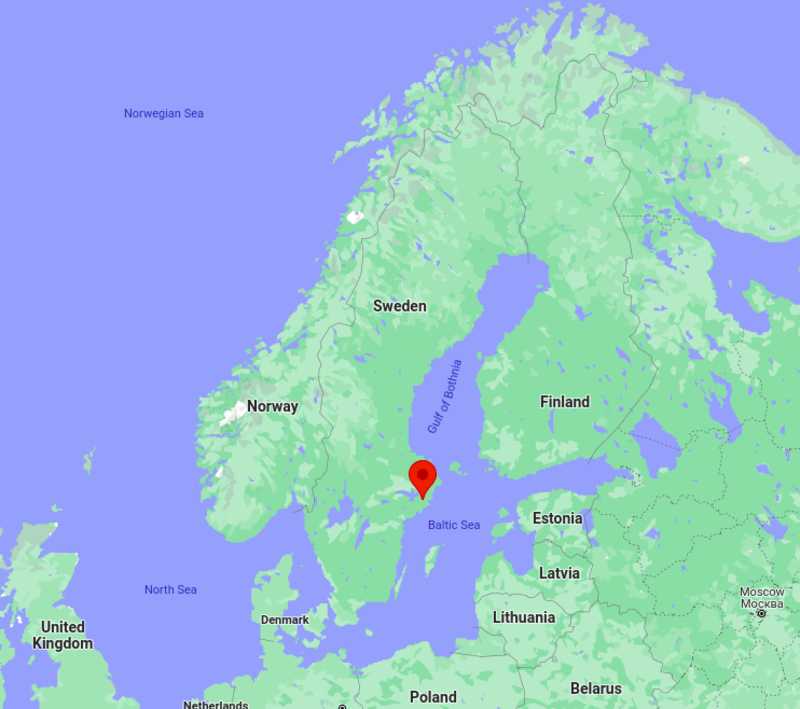 About Map: The map showing location of Stockholm in Sweden.